Biodiversity and Oceans
Africa's marine biodiversity is vital for economies, contributing over 35% of GDP in some regions, yet faces severe threats from overfishing, pollution, and climate change. Key conservation efforts include expanding Marine Protected Areas (MPAs), implementing ecosystem-based management, and promoting a sustainable "Blue Economy" to protect critical habitats like coral reefs and mangroves.

BACKGROUND
Africa’s diverse and rich biodiversity provides critical ecosystem services, drives the continent’s economy, and serves as a buffer to climate change. The African Union’s Agenda 2063 has declared the Blue Economy to be “Africa’s Future,” recognising the key role oceans play as catalysts for socioeconomic transformation.
Fisheries and aquaculture already contribute US$24 billion to the African economy. However, Africa needs to urgently address key challenges in the blue economy, including coastal erosion, biodiversity loss, pollution, and overfishing, to unlock the full potential of the Blue Economy.
About 21 per cent of the world’s mangroves are found in Africa. Coastal mangroves are unique ecosystems that provide critical socio-economic benefits, including coastal protection, food security (through fishing and mariculture), ecotourism opportunities, and carbon sequestration.
Despite their importance, mangroves have been depleted, overharvested for firewood and charcoal, or transformed as coastal areas have become more urbanised. Effective policies, patrolling, and surveillance efforts can improve the management, use, and protection of blue resources.
" The eradication of destructive fishing practices such as blasting, beach seining, juvenile fishing, the use of cyanide, and bottom-trawling would also restore marine life for sustainable use under a Blue Economy."
DEEP DIVE
Climate change is exacerbating these challenges by causing warming waters, sea level rise, acidification, and coastal erosion. Climbing sea-water temperatures and declining oxygen concentrations will have a significant effect on coastal and marine ecosystems, affecting primary production by phytoplankton and algae, as well as the abundance and distribution of marine species. Increasing temperatures are already leading to coral reef bleaching, and increased acidification is affecting coral calcification rates.
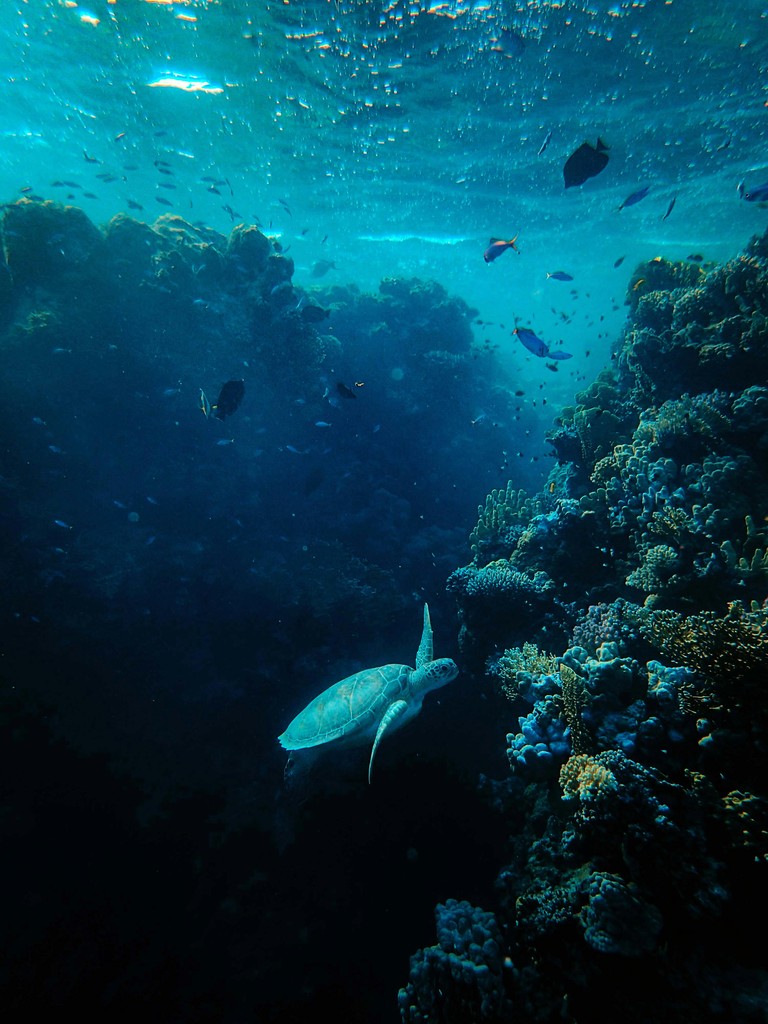
Both drivers threaten the survival of coral reefs, which provide vital habitat for many fish, sharks, crabs, and mollusc species that are of great economic value to many countries.
Under a high-carbon dioxide scenario, it is predicted that climate change will, by 2050, reduce the global maximum catch potential by 7.7 per cent, decreasing revenues by 10.4 per cent. (Maximum catch potential is a proxy measure for the maximum sustainable yield.)
Climate change could have a similarly significant impact on Africa’s marine fisheries, with West African countries expected to be among the worst affected, while North African countries will likely be less affected. Some African countries could even see an increased catch potential. Similarly, climate change will have different effects on the biomass and abundance of different marine ecosystems and species.

WHAT NEXT FOR AFRICA?
To fully seize the opportunities of the Blue Economy, Africa needs a combination of improved governance, ambitious, innovative investments into scalable solutions to improve the resilience of marine natural capital, strengthened knowledge of the marine environment, and better collaboration and enforcement.